
Text messages, the way the phone network carries them. Every conversation in one list, reply straight from the notification, names from your contacts if you allow it — and no internet permission, so a text can go nowhere but the number you sent it to.
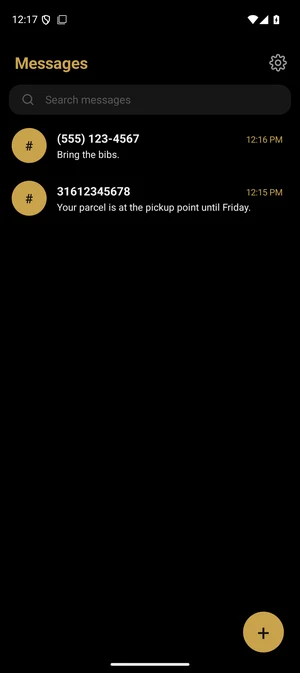
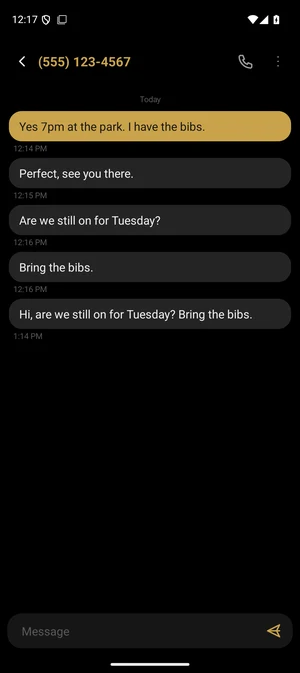
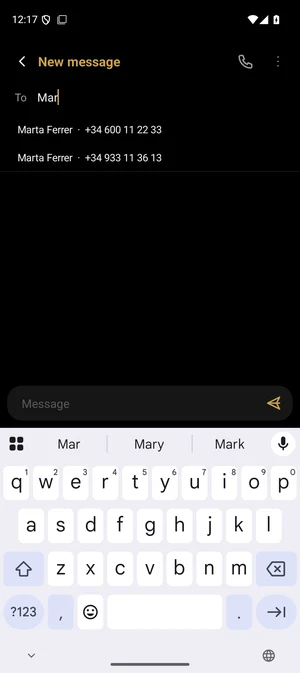
A text goes to the number you sent it to and nowhere else. The app holds no internet permission, so nothing it reads — your texts, your contacts' names — can leave the phone. Picture messages are announced, not fetched: fetching them would need the internet.
This is the whole list. Android prints the same thing under Settings › Apps › Permissions once the app is on your phone, and it was not written by us — check one against the other.
| SMS — send, receive, read | What a messaging app is: sending a text, being handed one when it arrives, and reading the conversation back from the phone’s message store |
|---|---|
| MMS and WAP push — receive | Android will only let an app be the messaging app if it accepts picture-message notices; the notice is shown, the picture is never fetched |
| Contacts | To show a name instead of a number. Optional: refuse it and everything works with numbers. Nothing is written back |
| Phone state | Read-only: which SIM the text goes out on |
| Notifications | To tell you a text arrived, with Reply on the notification |
| Vibrate | The buzz with a text |
Android 8.0 and up, on a phone with a SIM. Bought once, yours to keep: no account to make, no subscription, and no upgrade screen inside the app — the licence you buy unlocks it and every version after it.
Compared with Google Messages, Samsung Messages, Fossify Messages.


